

Cell Banking
Cell Banking Explained: How Storing Your Own Cells at -196°C Protects Your Future Health
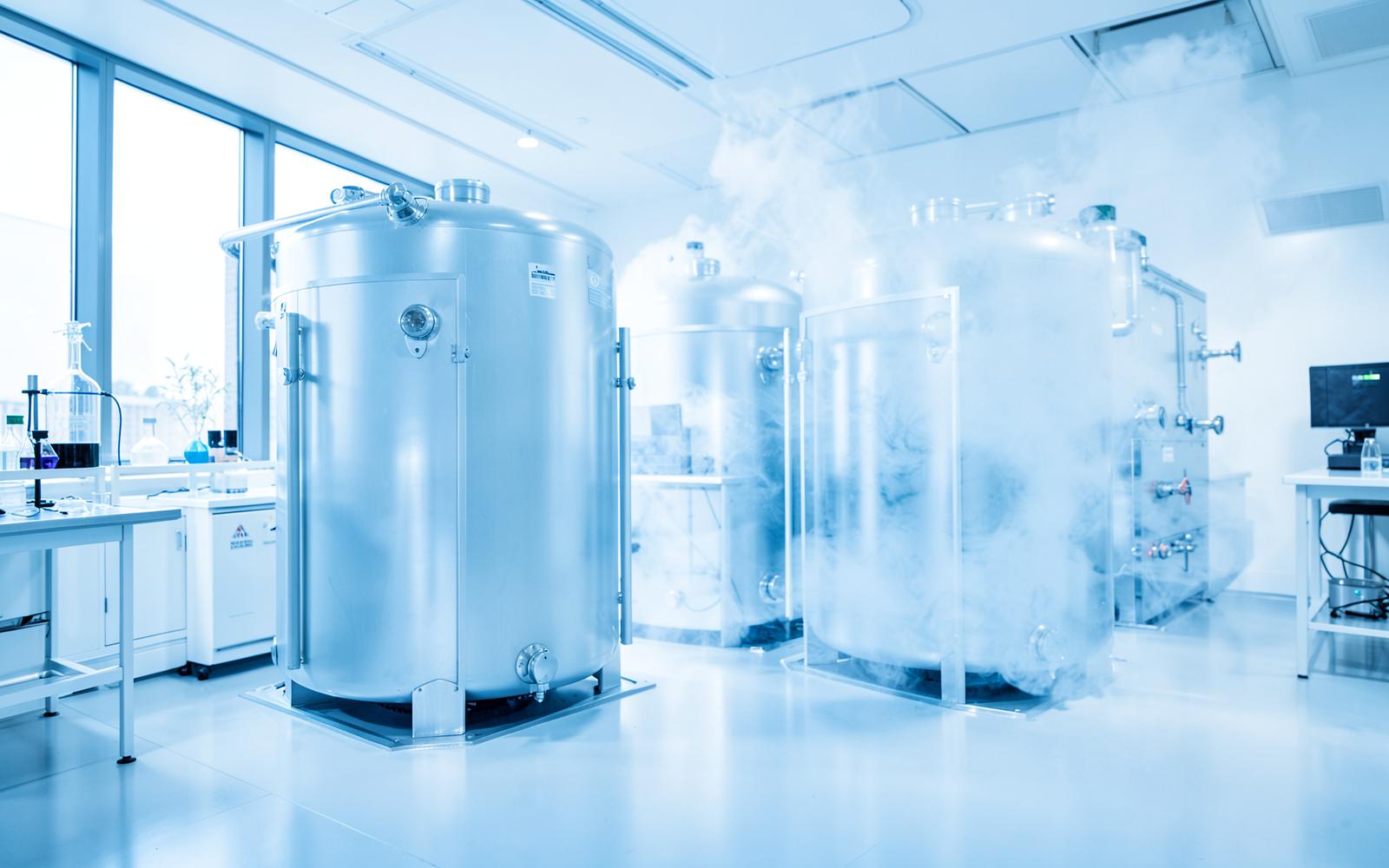
Cell banking is the practice of collecting your own stem cells and immune cells while they are healthy, then preserving them in liquid nitrogen so they remain viable for decades. It is one of the few health decisions that becomes less effective the longer you wait.
Key takeaways
- Cells are preserved in liquid nitrogen at -196°C, where biological activity effectively stops.
- Your own cells carry your own HLA type, so immune rejection risk is minimal.
- Cell quality declines with age and illness — earlier storage means better material.
- A broad blood panel at collection also gives you a detailed picture of current health.
What cell banking actually stores
Two cell families matter most for personal storage. Adult stem cells — mesenchymal and haematopoietic — carry the ability to differentiate into other tissue types and support regeneration. Immune cells, particularly natural killer (NK) cells and T cells, form the body's surveillance system against abnormal and infected cells.
Both are drawn from a routine blood collection or an adipose tissue sample. The material is separated in a dedicated cell separation room, checked for viability and contamination, then prepared with cryoprotectants that prevent ice crystals from rupturing cell membranes during freezing.

Why -196°C is the threshold that matters
Liquid nitrogen holds cells below the glass transition temperature of water, which stops the molecular movement that drives degradation. Above roughly -130°C, ice recrystallisation slowly damages structures; below it, cells can be held for decades with negligible loss of viability.
% viability
Post-thaw cell viability by storage temperature
-20°C
12%
-80°C
62%
-150°C
88%
-196°C
96%
Illustrative comparison of viability retention over ten years of storage at different temperatures.
The storage process, step by step
From first enquiry to certificate
- Enquiry and consultation — goals, medical background and suitability are reviewed.
- Storage agreement — term, scope and conditions are confirmed in writing.
- Collection — blood or tissue is collected under clinical supervision.
- Suitability testing — a 42-item blood panel plus sterility and viability checks.
- Processing — separation, concentration and cryoprotectant preparation.
- Transport — validated cold-chain transfer to the storage facility.
- Registration and certificate — your sample is logged and a storage certificate is issued.
Why age at collection changes the outcome
Proliferation capacity, differentiation range and overall cell activity all decline as the body ages, and serious illness reduces available stem cell numbers further. The cells you store in your thirties are materially different from the cells available in your sixties.
relative index
Relative stem cell proliferation capacity by age band
- 20s100
- 30s84
- 40s66
- 50s47
- 60s+31
Directional illustration of why earlier collection produces stronger stored material.
Facility standards to look for
- HEPA-filtered HVAC in every cleanroom, with controlled differential pressure between zones
- Automatic medical-grade CO2 and LN2 gas control
- 24-hour temperature, humidity and pressure monitoring with alarm escalation
- Patented freezing and thawing protocols, validated for each cell type
- Camera coverage of critical areas and documented operator training
Financial insurance compensates you after health is lost. Cell banking prepares the biological material to respond while you still have the choice.
Is it right for you?
Storage is most valuable for people with a family history of cancer or cardiovascular disease, those exposed to harmful occupational environments, anyone living with a chronic inflammatory condition, and healthy adults who simply want the option available. A consultation clarifies which cell types make sense for your situation before anything is collected.
Have a question about your own cells?
Speak with the Samsung Natural team about storage, immune-cell programmes or product selection.
714-306-2904