
Immune Science
NK Immune Cells: The Science Behind Your Body's First Line of Defence Against Cancer
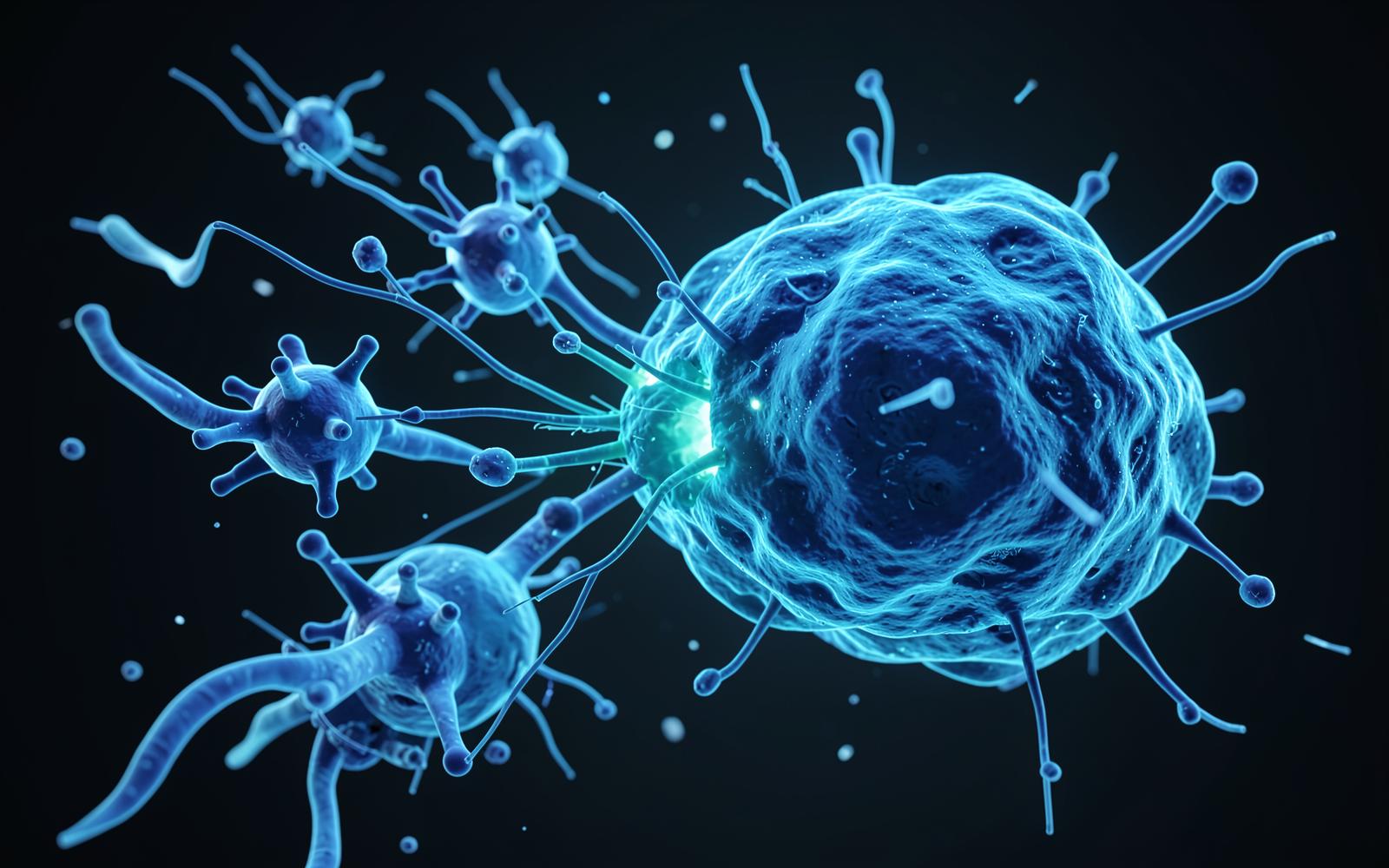
Natural killer cells are the part of your immune system that acts first and asks questions later. They recognise cells that have lost their normal identity markers and eliminate them directly, without needing prior exposure to a specific threat.
Key takeaways
- NK cells belong to innate immunity and respond within hours, not days.
- They detect the absence of normal 'self' markers rather than a specific antigen.
- NK activity falls with age, chronic stress, poor sleep and illness.
- Laboratory culture can expand and activate NK populations from a small blood sample.
Recognition without memory
Most immune responses require introduction. A B cell or T cell has to encounter an antigen, learn it and then mount a targeted response. NK cells work differently: they scan for cells that fail to display normal MHC class I identity markers — a signature common to tumour cells and virus-infected cells — and release cytotoxic granules on contact.
That difference matters clinically. Innate response times are measured in hours rather than the days an adaptive response needs, which is why NK activity is closely associated with early containment of abnormal cells.
The five immune cell types, compared
Immune cell roles at a glance
| Cell | Immunity type | Primary role |
|---|---|---|
| NK cell | Innate | Finds and destroys abnormal cells directly |
| T cell | Adaptive | Secretes toxins against known antigens, retains memory |
| B cell | Adaptive (humoral) | Coordinates antibody production |
| Macrophage | Innate / cellular | Engulfs pathogens, regulates immune balance |
| Dendritic cell | Bridging | Presents antigens and recruits T cells |
How NK activity changes over a lifetime
NK cell count remains relatively stable with age, but functional activity — the ability to kill on contact — declines measurably. Chronic stress, disrupted sleep, prolonged illness and treatment such as chemotherapy all suppress it further.
relative activity
Relative NK cell activity by decade
- 20s100
- 30s92
- 40s78
- 50s63
- 60s51
- 70s+40
Directional illustration of functional NK activity decline across adult life.
What culture technology adds
A standard blood draw contains a modest NK population. Culture and proliferation technology isolates those cells, then expands and activates them under controlled conditions over roughly two to three weeks, producing a far larger and more active population than the original sample.
× starting population
NK population expansion during culture
Day 0
1
Day 5
12
Day 10
90
Day 14
220
Day 21
480
Typical expansion profile across a culture cycle, indexed to the starting population.
Reported characteristics of NK-based approaches
- Increased immune cell activity and reinforcement of natural immunity
- Low toxicity, with few side effects reported compared with cytotoxic therapy
- Applied alongside other treatment approaches rather than replacing them
- Relevant across a wide range of cancer types, including recurrent presentations
Immunity is not a fixed trait. It is a capacity that can be measured, supported and, when healthy cells are preserved early, drawn on later.
The practical takeaway
If NK activity peaks in early adulthood and culture technology works best with healthy starting material, the logical order is simple: measure now, store while cells are strong, and keep the option of expansion available for later. None of it requires a diagnosis to begin.
Have a question about your own cells?
Speak with the Samsung Natural team about storage, immune-cell programmes or product selection.
714-306-2904