Cell Nutrition
Collagen Absorption: Why 600 Da Molecular Weight Changes the Result
Most collagen supplements fail on physics, not on marketing. A native collagen molecule is far too large to cross the intestinal wall intact, which means the number that matters most is molecular weight measured in daltons.
Key takeaways
- Native collagen is around 300,000 Da — too large for direct absorption.
- Enzymatic hydrolysis reduces peptides to fragments the gut can take up.
- At roughly 600 Da, absorption efficiency rises sharply.
- MFDS functional certification requires clinical and safety evidence, not label claims.
The size problem
Collagen in its native triple-helix form has a molecular weight in the region of 300,000 daltons. The intestinal wall admits far smaller molecules, so unhydrolysed collagen is largely broken down indiscriminately or passes through without contributing usable peptides.
Hydrolysis solves this by using enzymes to cut the helix into short peptide chains. How far that process is taken determines the final molecular weight — and with it, how much actually reaches circulation.
relative absorption
Relative absorption efficiency by molecular weight
- Native ~300,000 Da8
- Hydrolysed ~5,000 Da38
- Peptide ~2,000 Da62
- Low-molecular 600 Da94
Directional comparison of peptide uptake across common collagen preparations.
Plant-based versus animal-derived
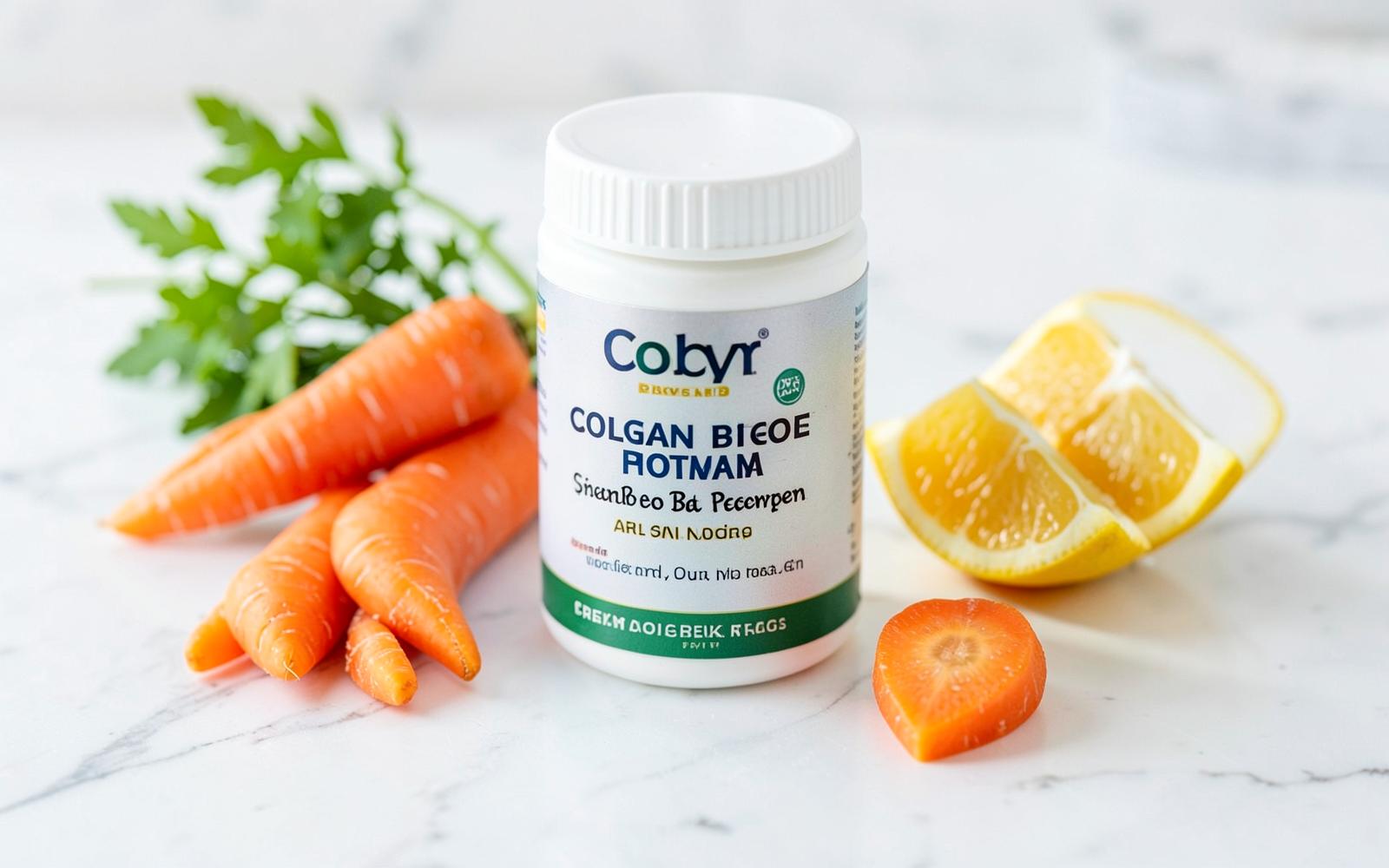
Most collagen on the market is marine or bovine. A carrot-derived plant collagen produced with patented hydrolysis technology avoids animal ingredients entirely, dissolves readily in cold water, and carries no fishy odour — a practical difference for daily long-term use.
What the formulation contains
Composition at a glance
| Ingredient | Share | Function |
|---|---|---|
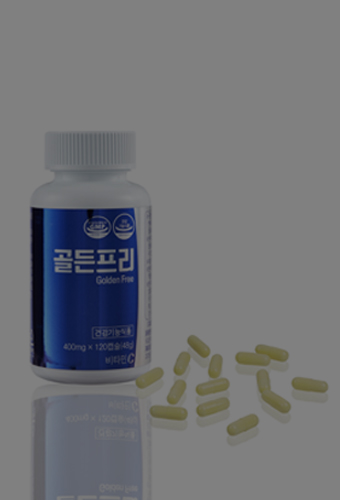
| Low-molecular collagen peptide (carrot hydrolysate) | 36% | Moisture, elasticity and wrinkle care |
| Vitamin C | 35% | Essential cofactor for collagen synthesis and iron absorption |
| L-arginine | 15% | Supports proline synthesis, repair and anabolic signalling |
| Taurine | 9.45% | Antioxidant and cellular hydration support |
| L-cystine | 3% | Supports brightening by inhibiting melanin-forming enzymes |
Why vitamin C is not optional
Collagen synthesis depends on two vitamin C-dependent enzymes. Without adequate vitamin C, supplied peptides cannot be assembled into stable collagen structures — which is why the two are formulated together in near-equal proportion rather than sold separately.
What functional certification requires
The MFDS functional health food process
- Documented raw material origin and manufacturing method
- Defined daily intake level with a safety margin
- Contaminant and heavy metal specifications with batch testing
- Animal safety studies covering toxicity and tolerance
- Human clinical trial evidence for the claimed function
Our collagen completed that process and is certified as helping maintain skin health against moisture loss and UV-related damage — a specific, verified claim rather than a general wellness statement.
A collagen label tells you what is in the tub. Molecular weight tells you what reaches your skin.
Have a question about your own cells?
Speak with the Samsung Natural team about storage, immune-cell programmes or product selection.
714-306-2904